
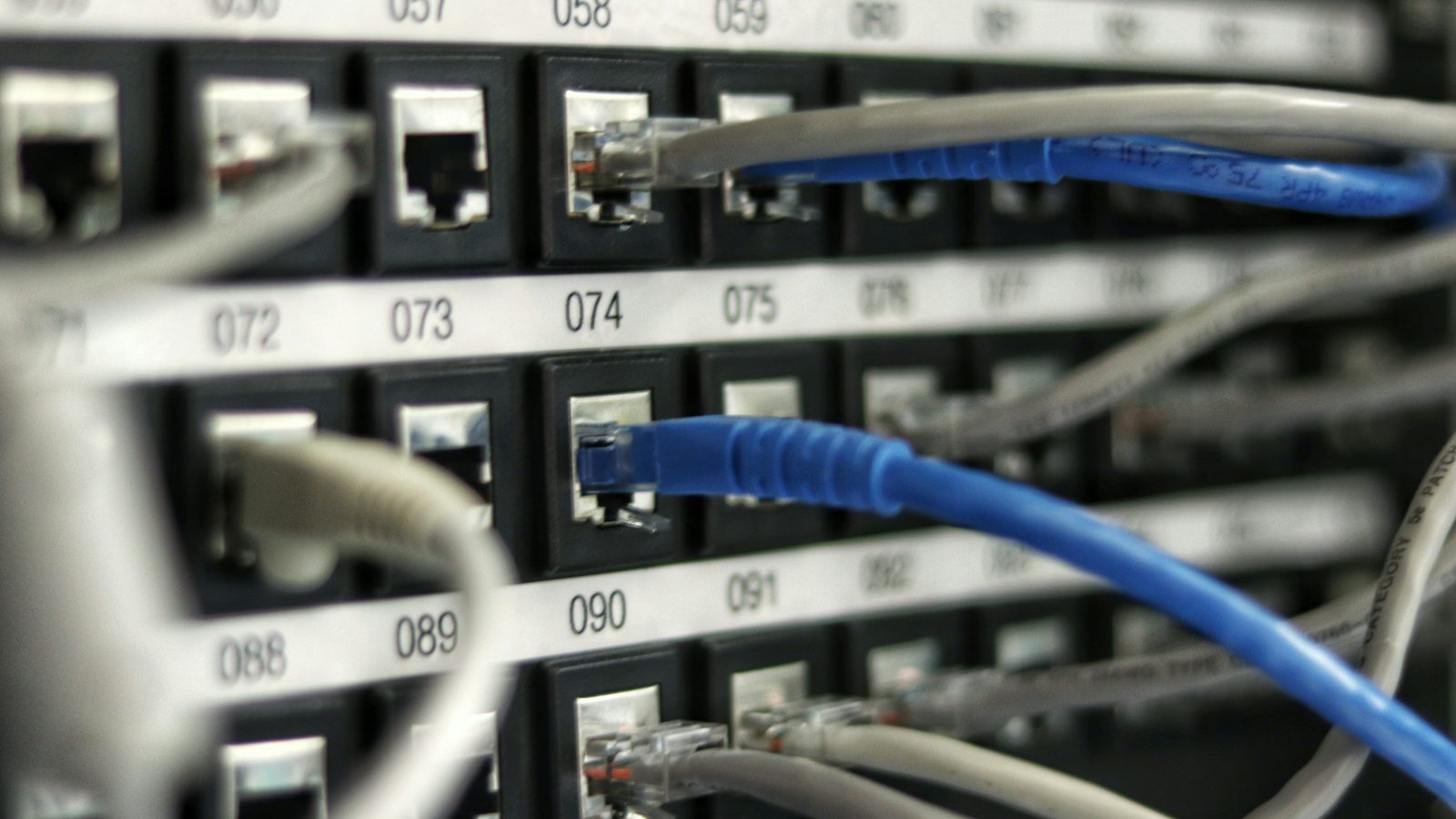
Open the network closet in plenty of Monterey offices and you'll find a tangle of blue cable with no labels, a few runs that go nowhere, and one held together with electrical tape. Structured cabling is the organized version. Every cable runs from a desk or ceiling back to a patch panel, gets a label on both ends, and is tested before anyone plugs in. It's dull work, and it decides whether your network behaves.
When You Need Structured Cabling
Moving or remodeling is the main time, because walls are open and runs are easy to add. It's also worth a look if certain desks are always slower, or connections drop whenever someone bumps a cable. Adding cameras or ceiling Wi-Fi? Those need wired connections too. So do desk phones, and if you're moving to rVoice or another cloud phone system, check the cabling first. Voice calls are the first thing to suffer on a bad run.
Older buildings take more planning. Parts of downtown Monterey and Cannery Row have thick plaster and adobe walls, and getting a cable from one room to the next can mean careful drilling, surface raceway, or a route through the ceiling. Raceway is a slim channel mounted along the wall that hides the cable. It's slow going.
So we plan those runs before anyone picks up a drill, and we look for the path that does the least damage to walls you probably can't replace.
How Our Structured Cabling Works
We walk the space with you and mark every spot that needs a connection, plus a couple of spares. Then we plan the routes and put the quote in writing.
During the install, each cable gets pulled back to a patch panel in the closet. That's a row of numbered jacks that keeps everything in order. Every cable is labeled at both ends and checked with a cable tester to confirm it carries full speed. You get a map showing which jack goes where.
The Telecommunications Industry Association publishes the cabling standards our work follows, which cover how cable should be run and terminated.
Structured Cabling Cost in Monterey
Cost depends on how many drops you need, how far each run travels, and what the building is made of. A drop is one cable to one spot. Open ceilings in a newer space go quickly, while plaster and old framing take longer. Cable grade matters too, since Cat6a costs more than Cat6. We quote the job in writing after the walkthrough, before any cable is pulled.
Why Monterey Offices Use Us for Cabling
We've supported Monterey County businesses since 2008, so we've seen plenty of buildings where the walls fight back. If we also look after your network, a messy closet only makes our own job harder, which is a good reason to leave it tidy.
When a cable fault takes the office down later, critical tickets get a technician within 15 minutes.
Call (831) 649-5050 to book a walkthrough. Cabling sits under everything else on our list of business network services in Monterey.
Frequently Asked Questions
Is Cat6 cable good enough for a small office?
For nearly every small office, yes. Cat6 handles gigabit speeds easily and can carry 10-gigabit over shorter runs. Cat6a makes sense if you move very large files all day or plan to add the newest Wi-Fi gear.
Can you clean up our existing network closet?
Yes. We can re-terminate and label what's there, swap out bad patch cords, and test each run. Sometimes the cleanup alone fixes the slowdowns that started the call.
Can you run cable for cameras and desk phones at the same time?
Yes, and it's cheaper to do it in one trip. Cameras, desk phones, and ceiling access points all use the same kind of network cable, so we plan those runs together with the ones going to desks.